
CANNABIS ETHICS LISTENING PROJECT
What does responsibility look like when an industry changes?
WHAT ARE ETHICS?
Ethics begin where simply following the rules is not enough.
Laws and regulations tell us what is required, permitted or prohibited. Ethics ask us to consider responsibility, fairness, transparency, accountability and the impact our decisions have on other people.
Every industry faces these questions:
- Who has a responsibility to protect people from harm?
- What information should be disclosed?
- Who is accountable when something goes wrong?
- How do we build trust?
- How do we make decisions when the rules have not caught up with the reality?
These questions become especially important during periods of rapid change. Cannabis is living through one of those periods now.
Generations of plant knowledge, genetics, medicine, culture, community experience and enforcement history are meeting new regulations, laboratories, businesses, technologies and markets.
Understanding cannabis ethics means looking beyond what is allowed and asking what kind of system we are building.
Other industries have had to ask these questions too.
SO WE ASKED
Cannabis has been shaped by decades of prohibition, enforcement, community knowledge, medical use, cultivation, advocacy and, more recently, state-authorized adult use.
As new systems were being built, we wanted to understand something more fundamental:
What does ethics mean in cannabis, according to the people who have lived and worked with the plant?
So we asked.
The Cannabis Ethics Survey invited patients, consumers, legacy growers, educators, advocates, scientists, researchers and community members to share what they believe an ethical cannabis system should protect, where current systems are falling short and what should guide the path forward.
We also asked Humboldt County public safety personnel a separate set of questions about enforcement, regulation, community impacts and the challenges they encounter.
These are different perspectives and different datasets. They are not meant to speak for one another. They are meant to be heard together.
That is where The Synthesis begins.
COMING SOON - IN REVIEW
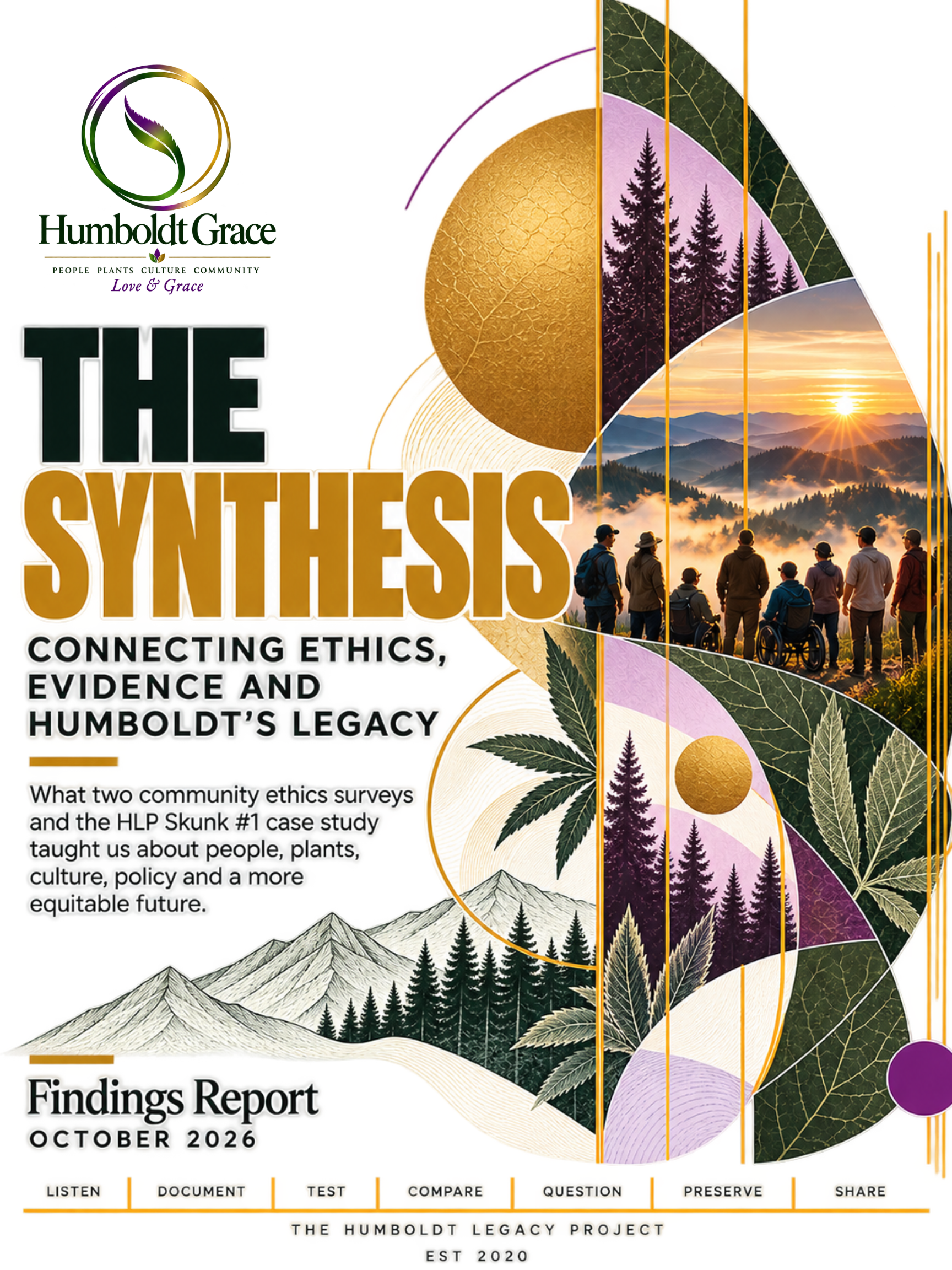
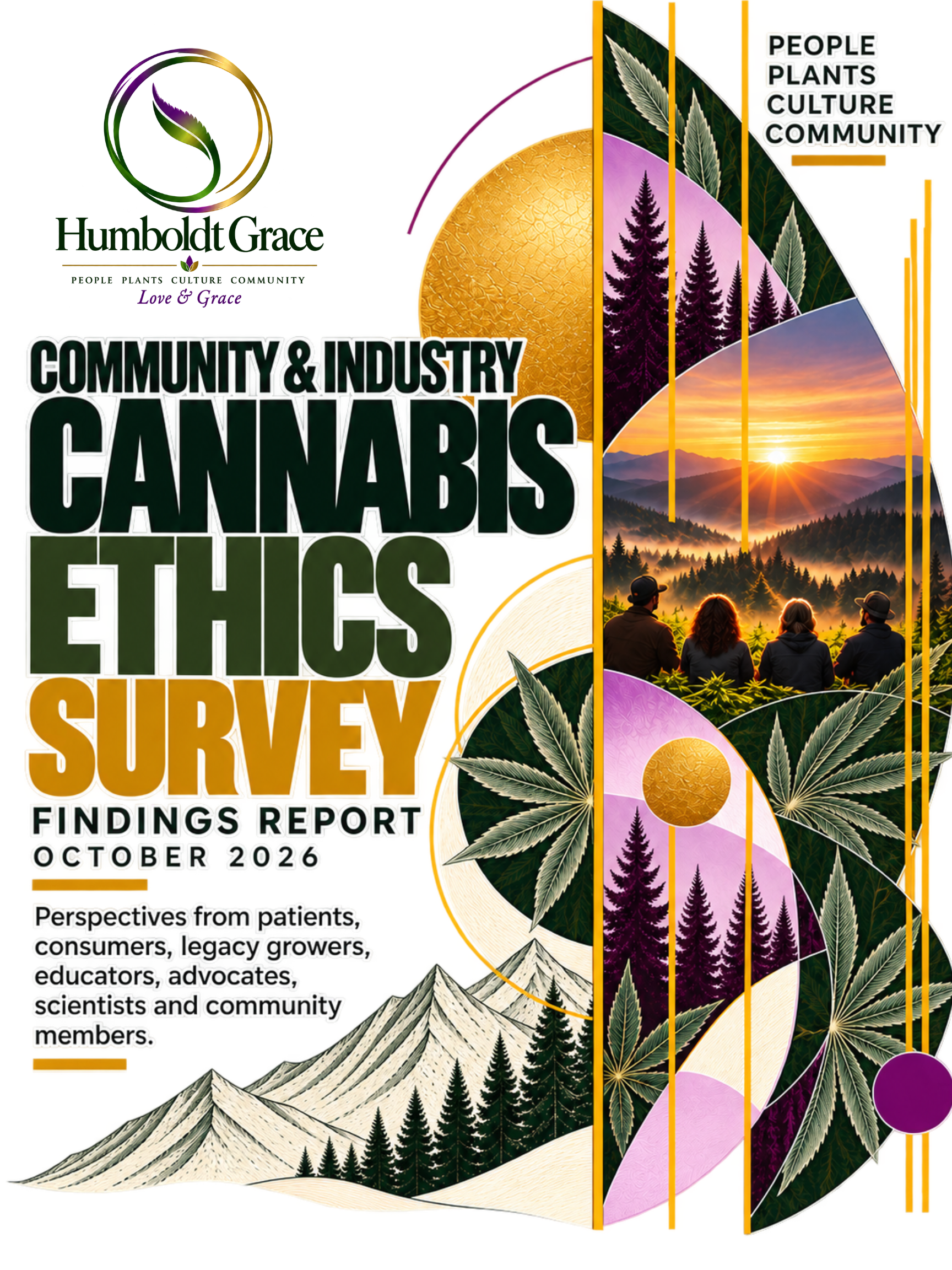
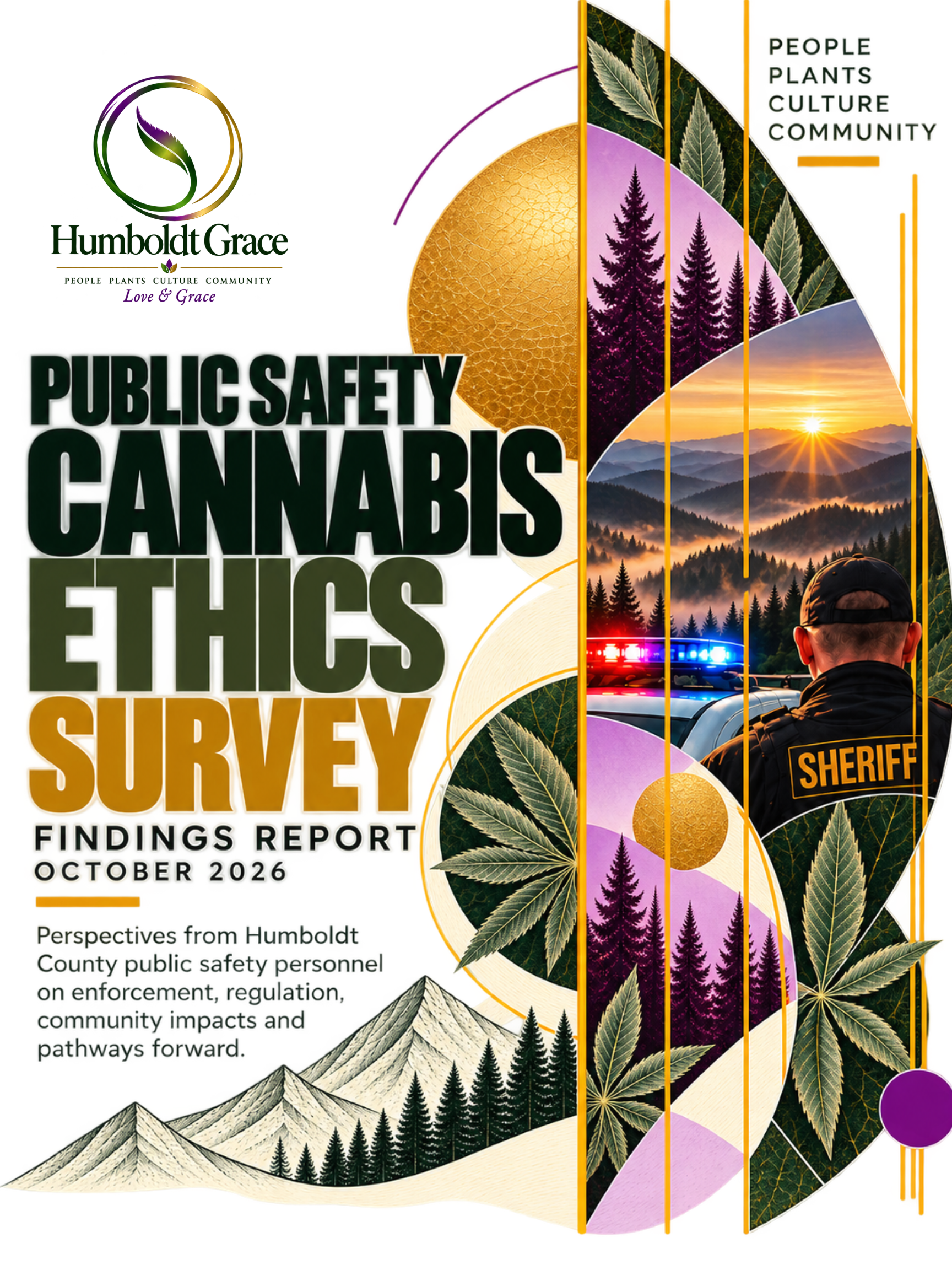
THE SYNTHESIS
Brings the Community & Industry and Public Safety findings together with lessons from the Humboldt Legacy Project Skunk #1 case study to examine where perspectives connect, where they differ, and what they can teach us about building stronger systems around cannabis.
COMMUNITY & INDUSTRY FINDINGS
Shares perspectives from patients, consumers, legacy growers, educators, advocates, scientists and community members on ethics, trust, transparency, product integrity, policy and the future of cannabis.
PUBLIC SAFETY FINDINGS
Documents perspectives from Humboldt County public safety personnel on enforcement, regulation, community impacts and the challenges they see within today’s cannabis systems.
What does responsibility look like when an industry changes?
WHAT ARE ETHICS?
Ethics begin where simply following the rules is not enough.
Laws and regulations tell us what is required, permitted or prohibited. Ethics ask us to consider responsibility, fairness, transparency, accountability and the impact our decisions have on other people.
Every industry faces these questions:
- Who has a responsibility to protect people from harm?
- What information should be disclosed?
- Who is accountable when something goes wrong?
- How do we build trust?
- How do we make decisions when the rules have not caught up with the reality?
These questions become especially important during periods of rapid change. Cannabis is living through one of those periods now.
Generations of plant knowledge, genetics, medicine, culture, community experience and enforcement history are meeting new regulations, laboratories, businesses, technologies and markets.
Understanding cannabis ethics means looking beyond what is allowed and asking what kind of system we are building.
Other industries have had to ask these questions too.
SO WE ASKED
Cannabis has been shaped by decades of prohibition, enforcement, community knowledge, medical use, cultivation, advocacy and, more recently, state-authorized adult use.
As new systems were being built, we wanted to understand something more fundamental:
What does ethics mean in cannabis, according to the people who have lived and worked with the plant?
So we asked.
The Cannabis Ethics Survey invited patients, consumers, legacy growers, educators, advocates, scientists, researchers and community members to share what they believe an ethical cannabis system should protect, where current systems are falling short and what should guide the path forward.
We also asked Humboldt County public safety personnel a separate set of questions about enforcement, regulation, community impacts and the challenges they encounter.
These are different perspectives and different datasets. They are not meant to speak for one another. They are meant to be heard together.
That is where The Synthesis begins.
RELEASING FINDINGS ON HALLOWEEN
THE SYNTHESIS
Brings the Community & Industry and Public Safety findings together with lessons from the Humboldt Legacy Project Skunk #1 case study to examine where perspectives connect, where they differ, and what they can teach us about building stronger systems around cannabis.
COMMUNITY & INDUSTRY FINDINGS
Shares perspectives from patients, consumers, legacy growers, educators, advocates, scientists and community members on ethics, trust, transparency, product integrity, policy and the future of cannabis.
PUBLIC SAFETY FINDINGS
Documents perspectives from Humboldt County public safety personnel on enforcement, regulation, community impacts and the challenges they see within today’s cannabis systems.
Frequently Asked Questions
What is the difference between cannabis laws and cannabis ethics?
Laws establish what is required, permitted, or prohibited. Ethics asks whether our decisions are responsible, fair, transparent, and considerate of their consequences.
Something can be legally permitted without necessarily being ethical. Ethical questions also arise when laws themselves create unintended consequences.
Why study cannabis ethics now?
Cannabis is experiencing significant changes in regulation, research, technology, and commercial development.
These changes raise questions about who benefits, whose knowledge is recognized, how products are evaluated, and what happens to communities with generations of experience.
Understanding these questions can help inform future decisions.
Whose perspectives are included in Humboldt Grace’s research?
The research includes voluntary participation from patients, consumers, legacy growers, educators, advocates, scientists, community members, and Humboldt County public safety personnel.
These perspectives offer different experiences with cannabis, its history, and the systems surrounding it.
The surveys were not designed as representative population samples, and their findings should be understood within that limitation.
What is The Synthesis?
The Synthesis connects findings from the Community & Industry Cannabis Ethics Survey, the Public Safety Cannabis Ethics Survey, and the Humboldt Legacy Project Skunk #1 case study.
It examines where different perspectives and forms of evidence connect, where they differ, and what questions remain.
Its purpose is to encourage informed conversations about protecting, authenticating, and valuing plants, peoples, and cultures.
Does Humboldt Grace advocate for a particular cannabis policy?
Humboldt Grace is a community initiative focused on research, education, documentation, and the protection of plants, peoples, and cultures.
Our research does not begin with the assumption that any single perspective has all the answers.
We seek to make information available, encourage thoughtful discussion, and support informed decisions.
Why include public safety perspectives in cannabis ethics research?
Cannabis history includes experiences of cultivation, enforcement, prohibition, regulation, and community change.
Public safety personnel have participated in these systems from a different perspective than growers, patients, and consumers.
Including their experiences creates an opportunity to examine similarities, differences, and potential areas of understanding.
The Public Safety Survey reflects a small voluntary group of nine participants and does not represent an official Humboldt County Sheriff’s Office position.
Where can I read the research?
Humboldt Grace’s Cannabis Ethics research is presented in three companion publications:
The Synthesis: Connects the research and examines its broader implications.
Community & Industry Findings: Documents perspectives from people involved with cannabis across different roles and experiences.
Public Safety Findings: Examines perspectives on enforcement, regulation, community impacts, and potential pathways forward.
Each report can be explored individually, while The Synthesis brings their findings into a broader conversation.
Thank You For Your Support


